SiamCafe.net Blog
Technology

Volatility แปลว่าอะไร

volatility แปล
Volatility แปลว่าอะไร | SiamCafe Blog
2025-07-23· อ. บอม — SiamCafe.net· 11,729 คำ

Volatility

Volatility ความผันผวน Historical Implied VIX Standard Deviation ATR Bollinger Bands Option Pricing Risk Management Position Size Trading Strategy

Volatility TypeCalculationTimeframeUse CaseData Source
Historical (HV)StdDev of Log ReturnsPast 20-252 daysRisk assessmentPrice history
Implied (IV)Back-solved from OptionForward lookingOption pricingOption market
RealizedActual StdDev periodSpecific periodPerformance evalPrice history
ATRAvg True Range14 periods typicalStop loss sizingOHLC data
VIXS&P 500 Option IV30-day forwardMarket sentimentCBOE
Bollinger BW(Upper-Lower)/Middle20 periodsSqueeze detectionPrice + StdDev

Volatility Calculation

# === Volatility Calculation in Python ===

import numpy as np
from dataclasses import dataclass

def historical_volatility(prices, window=20):
    log_returns = np.diff(np.log(prices))
    rolling_std = []
    for i in range(window, len(log_returns) + 1):
        std = np.std(log_returns[i-window:i], ddof=1)
        annualized = std * np.sqrt(252)
        rolling_std.append(annualized)
    return rolling_std

def atr(high, low, close, period=14):
    tr_list = []
    for i in range(1, len(high)):
        tr = max(
            high[i] - low[i],
            abs(high[i] - close[i-1]),
            abs(low[i] - close[i-1])
        )
        tr_list.append(tr)
    atr_values = []
    atr_val = np.mean(tr_list[:period])
    atr_values.append(atr_val)
    for i in range(period, len(tr_list)):
        atr_val = (atr_val * (period - 1) + tr_list[i]) / period
        atr_values.append(atr_val)
    return atr_values

# Example calculation
np.random.seed(42)
prices = 100 + np.cumsum(np.random.randn(100) * 1.5)
hv = historical_volatility(prices, 20)

print("=== Historical Volatility ===")
print(f"  Latest HV (20-day): {hv[-1]:.2%}")
print(f"  Average HV: {np.mean(hv):.2%}")
print(f"  Max HV: {np.max(hv):.2%}")
print(f"  Min HV: {np.min(hv):.2%}")

@dataclass
class VolRegime:
    regime: str
    hv_range: str
    vix_range: str
    market_behavior: str
    strategy: str

regimes = [
    VolRegime("Low", "< 15%", "< 15", "ตลาดสงบ Trend ชัด", "Trend Following, Sell Premium"),
    VolRegime("Normal", "15-25%", "15-20", "ตลาดปกติ มี Swing", "Swing Trading, Covered Call"),
    VolRegime("High", "25-40%", "20-30", "ตลาดผันผวน ข่าวสำคัญ", "Reduce Size, Widen Stops"),
    VolRegime("Extreme", "> 40%", "> 30", "ตลาดตกใจ Crisis", "Hedge, Buy Premium, Cash"),
]

print(f"\nVolatility Regimes:")
for v in regimes:
    print(f"  [{v.regime}] HV: {v.hv_range} | VIX: {v.vix_range}")
    print(f"    Market: {v.market_behavior}")
    print(f"    Strategy: {v.strategy}")

Trading Applications

# === Volatility-based Trading ===

# Position Sizing with ATR
# risk_per_trade = account * 0.01  # 1% risk
# stop_loss_distance = atr * 2     # 2x ATR
# position_size = risk_per_trade / stop_loss_distance

# Bollinger Bands
# middle = SMA(close, 20)
# upper = middle + 2 * StdDev(close, 20)
# lower = middle - 2 * StdDev(close, 20)
# bandwidth = (upper - lower) / middle

# Bollinger Squeeze Detection
# if bandwidth < threshold:  # Squeeze — low volatility
#     prepare_for_breakout()
# if bandwidth > high_threshold:  # Expansion — high volatility
#     consider_mean_reversion()

@dataclass
class TradingSetup:
    setup: str
    volatility_condition: str
    entry: str
    stop_loss: str
    target: str
    risk_reward: str

setups = [
    TradingSetup("Breakout", "Bollinger Squeeze → Expansion", "Break above Upper Band", "Below Middle Band", "2x ATR from entry", "1:2"),
    TradingSetup("Mean Reversion", "Bollinger > 2 StdDev", "Touch Lower Band + RSI < 30", "Below recent low", "Middle Band", "1:1.5"),
    TradingSetup("Trend Follow", "ATR rising + ADX > 25", "Pullback to 20 EMA", "1.5x ATR", "3x ATR", "1:2"),
    TradingSetup("Range Trade", "ATR falling + ADX < 20", "Support/Resistance bounce", "Outside range", "Opposite boundary", "1:1"),
    TradingSetup("Vol Expansion", "VIX spike > 25%", "After spike settles", "Above VIX high", "VIX mean revert", "1:2"),
]

print("\n=== Volatility Trading Setups ===")
for s in setups:
    print(f"  [{s.setup}] Vol: {s.volatility_condition}")
    print(f"    Entry: {s.entry}")
    print(f"    SL: {s.stop_loss} | TP: {s.target} | R:R: {s.risk_reward}")

Risk Management

# === Risk Management with Volatility ===

@dataclass
class RiskRule:
    rule: str
    low_vol: str
    normal_vol: str
    high_vol: str
    extreme_vol: str

rules = [
    RiskRule("Position Size", "Full (1-2% risk)", "Normal (1% risk)", "Half (0.5% risk)", "Quarter (0.25% risk)"),
    RiskRule("Stop Loss", "1.5x ATR", "2x ATR", "2.5x ATR", "3x ATR or no trade"),
    RiskRule("Max Open Trades", "5-8", "3-5", "2-3", "0-1"),
    RiskRule("Leverage", "Normal", "Reduce 25%", "Reduce 50%", "No leverage"),
    RiskRule("Hedge", "ไม่จำเป็น", "Optional", "Recommended", "Required"),
    RiskRule("Cash Allocation", "10-20%", "20-30%", "30-50%", "50-80%"),
]

print("Risk Management by Volatility:")
for r in rules:
    print(f"  [{r.rule}]")
    print(f"    Low: {r.low_vol}")
    print(f"    Normal: {r.normal_vol}")
    print(f"    High: {r.high_vol}")
    print(f"    Extreme: {r.extreme_vol}")

# Kelly Criterion adjusted for volatility
# f = (W * R - L) / R
# f_adjusted = f * (base_vol / current_vol)
# Where lower vol = larger position, higher vol = smaller position

vol_tools = {
    "ATR Indicator": "TradingView: ATR(14) overlay on chart",
    "Bollinger Bands": "TradingView: BB(20,2) squeeze detection",
    "VIX Chart": "TradingView: CBOE:VIX daily chart",
    "IV Rank": "Option platform: current IV vs 52-week range",
    "HV Calculator": "Python script above or Excel",
    "Vol Surface": "Option platform: IV by strike and expiry",
}

print(f"\n\nVolatility Tools:")
for k, v in vol_tools.items():
    print(f"  [{k}]: {v}")

เคล็ดลับ

การนำความรู้ไปประยุกต์ใช้งานจริง

แหล่งเรียนรู้ที่แนะนำ ได้แก่ Official Documentation ที่อัพเดทล่าสุดเสมอ Online Course จาก Coursera Udemy edX ช่อง YouTube คุณภาพทั้งไทยและอังกฤษ และ Community อย่าง Discord Reddit Stack Overflow ที่ช่วยแลกเปลี่ยนประสบการณ์กับนักพัฒนาทั่วโลก

เปรียบเทียบข้อดีและข้อเสีย

ข้อดีข้อเสีย
ประสิทธิภาพสูง ทำงานได้เร็วและแม่นยำ ลดเวลาทำงานซ้ำซ้อนต้องใช้เวลาเรียนรู้เบื้องต้นพอสมควร มี Learning Curve สูง
มี Community ขนาดใหญ่ มีคนช่วยเหลือและแหล่งเรียนรู้มากมายบางฟีเจอร์อาจยังไม่เสถียร หรือมีการเปลี่ยนแปลงบ่อยในเวอร์ชันใหม่
รองรับ Integration กับเครื่องมือและบริการอื่นได้หลากหลายต้นทุนอาจสูงสำหรับ Enterprise License หรือ Cloud Service
เป็น Open Source หรือมีเวอร์ชันฟรีให้เริ่มต้นใช้งานต้องการ Hardware หรือ Infrastructure ที่เพียงพอ

จากตารางเปรียบเทียบจะเห็นว่าข้อดีมีมากกว่าข้อเสียอย่างชัดเจน โดยเฉพาะในแง่ของประสิทธิภาพและความสามารถในการ Scale สำหรับข้อเสียส่วนใหญ่สามารถแก้ไขได้ด้วยการเรียนรู้อย่างเป็นระบบและวางแผนทรัพยากรให้เหมาะสม

Volatility แปลว่าอะไร

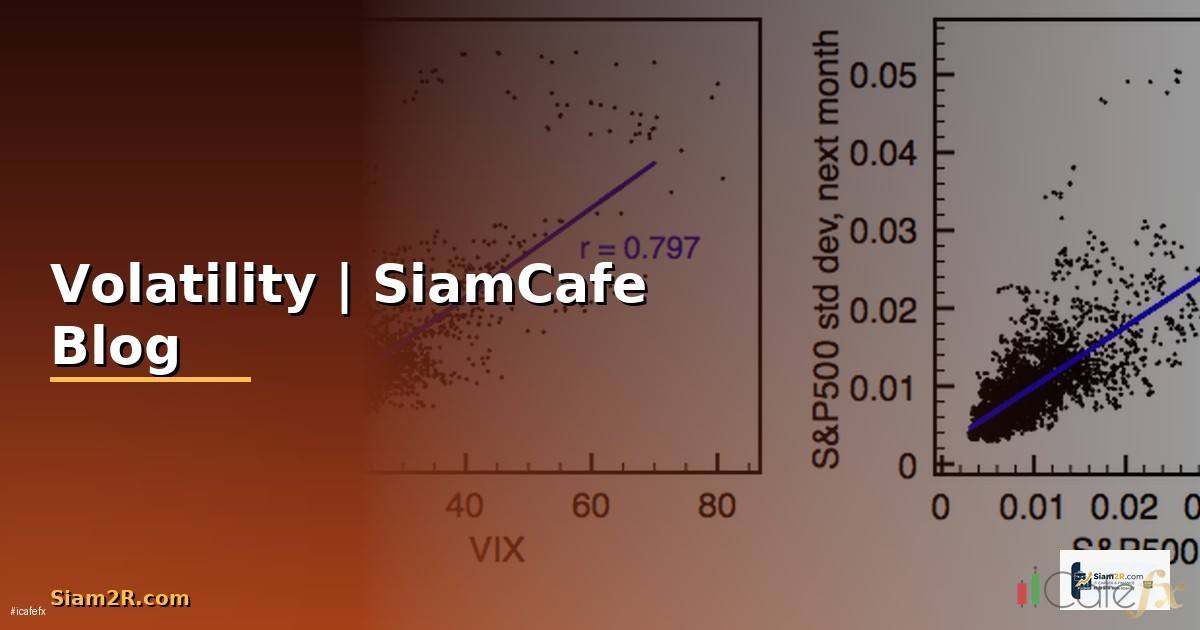
ความผันผวน การเปลี่ยนแปลงราคา Standard Deviation สูงเปลี่ยนมาก ต่ำเปลี่ยนน้อย หุ้น Forex Crypto Option ความเสี่ยง โอกาส

Historical กับ Implied Volatility ต่างกันอย่างไร

HV คำนวณจากอดีต StdDev Log Return IV คำนวณจาก Option ราคาตลาด อนาคต IV สูงกว่า HV ตลาดคาดผันผวนมาก Black-Scholes

VIX Index คืออะไร

Volatility Index S&P 500 IV 30 วัน ต่ำกว่า 20 สงบ 20-30 ปานกลาง สูงกว่า 30 กลัว Fear Index ความเชื่อมั่น Futures ETF Options

ใช้ Volatility ในการเทรดอย่างไร

ATR Stop Loss Position Size Bollinger Bands Squeeze Breakout Mean Reversion VIX Sentiment Option Straddle Strangle Risk Reward Regime

สรุป

Volatility ความผันผวน Historical Implied VIX ATR Bollinger Bands Position Size Risk Management Regime Trading Strategy Option Pricing Production


📖 บทความที่เกี่ยวข้อง

ripple แปลอ่านบทความ → passive income แปลอ่านบทความ → drawdown แปลอ่านบทความ → balance แปลอ่านบทความ →

📚 ดูบทความทั้งหมด →