ai

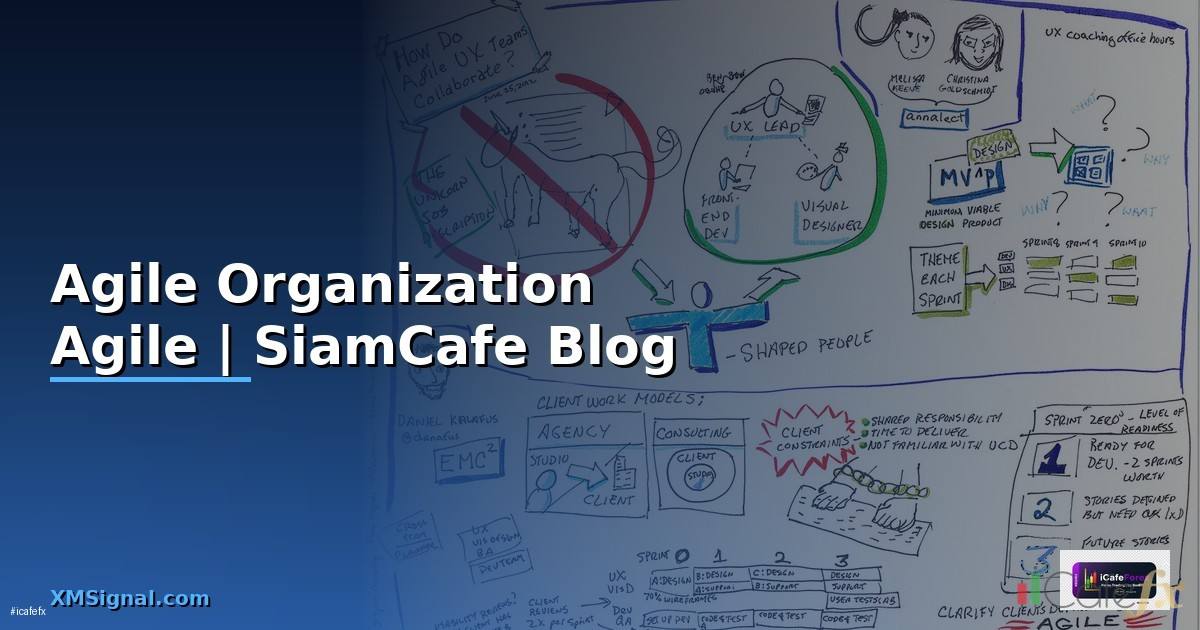
Agile Organization คือ — องค์กรแบบ Agile

Agile Organization คือ — องค์กรแบบ Agile
Agile Organization

Agile Organization คือ — องค์กรแบบ Agile

Agile Organization Customer-centric Cross-functional Teams Iteration Feedback Loop Transparent Communication Continuous Learning Scaling Framework Culture Transformation

AspectTraditionalAgile Organization
StructureHierarchical SiloFlat Cross-functional
DecisionTop-down SlowDecentralized Fast
PlanningLong-term FixedIterative Adaptive
DeliveryBig Bang InfrequentIncremental Frequent
FailureBlame PunishLearn Improve
CommunicationNeed-to-knowTransparent Open
CustomerAt the EndAt the Center

Scaling Frameworks

# === Agile Scaling Frameworks Comparison ===


from dataclasses import dataclass


@dataclass


class ScalingFramework:


    name: str


    org_size: str


    teams: str


    key_concepts: str


    complexity: str


    adoption: str


frameworks = [


    ScalingFramework(


        "SAFe", "500+ people", "50+ teams",


        "ART, PI Planning, Program Board, Value Stream",


        "สูง (heavy process)", "แพร่หลายที่สุด 53%"


    ),


    ScalingFramework(


        "LeSS", "50-500 people", "2-8 teams",


        "Single Product Backlog, Sprint Review, Overall Retro",


        "ปานกลาง", "ปานกลาง 5%"


    ),


    ScalingFramework(


        "Spotify Model", "100-1000 people", "10-100 squads",


        "Squad, Tribe, Chapter, Guild, Autonomy",


        "ปานกลาง (flexible)", "สูง 15%"


    ),


    ScalingFramework(


        "Nexus", "50-200 people", "3-9 teams",


        "Nexus Integration Team, Nexus Sprint, Cross-team Refine",


        "ต่ำ-ปานกลาง", "ต่ำ 3%"


    ),


    ScalingFramework(


        "DAD", "Any size", "Any",


        "Choose Your WoW, Hybrid, Context-sensitive",


        "ปานกลาง", "ต่ำ 2%"


    ),


]


print("=== Scaling Frameworks ===")


for f in frameworks:


    print(f"  [{f.name}] Size: {f.org_size} | Teams: {f.teams}")


    print(f"    Concepts: {f.key_concepts}")


    print(f"    Complexity: {f.complexity} | Adoption: {f.adoption}")


# Spotify Model Detail


# Squad: Self-organizing team 6-12 people (like Scrum Team)


# Tribe: Group of related Squads (< 100 people)


# Chapter: Group of same-role across Squads (e.g., all Backend devs)


# Guild: Cross-tribe community of interest (e.g., Testing Guild)


spotify = {


    "Squad": "ทีมอิสระ 6-12 คน มี Product Owner ตัดสินใจเอง",


    "Tribe": "กลุ่ม Squad ที่เกี่ยวข้อง ไม่เกิน 100 คน มี Tribe Lead",


    "Chapter": "กลุ่มคนตำแหน่งเดียวกันข้าม Squad เช่น Backend Devs ทั้งหมด",


    "Guild": "ชุมชนข้าม Tribe เช่น Testing Guild แชร์ Best Practices",


    "Alignment": "Tribe Lead + PO กำหนด Direction ทีมเลือกวิธีเอง",


    "Autonomy": "Squad ตัดสินใจ Tech Stack Process Deploy เอง",


}


print(f"\n\nSpotify Model:")


for k, v in spotify.items():


    print(f"  [{k}]: {v}")

Transformation Roadmap

# === Agile Transformation Roadmap ===


@dataclass


class TransformPhase:


    phase: str


    duration: str


    activities: str


    success_metric: str


    risk: str


phases = [


    TransformPhase(


        "Phase 1: Foundation", "1-3 months",


        "Executive buy-in, Agile Coach hired, Pilot team selected, Training",


        "Pilot team running Scrum/Kanban, Leadership aligned",


        "Resistance from management"


    ),


    TransformPhase(


        "Phase 2: Pilot", "3-6 months",


        "1-2 teams practice Agile, Regular retros, Quick wins, Share learnings",


        "Lead time reduced 30%, Team satisfaction up",


        "Pilot treated as experiment not commitment"


    ),


    TransformPhase(


        "Phase 3: Expand", "6-12 months",


        "5-10 teams onboarded, Communities of Practice, Shared tooling",


        "Multiple teams delivering, Cross-team coordination",


        "Scaling too fast, inconsistency"


    ),


    TransformPhase(


        "Phase 4: Optimize", "12-24 months",


        "Organization-wide adoption, Portfolio-level Agile, Metrics-driven",


        "Customer satisfaction up, Time-to-market down 50%",


        "Complacency, reverting to old ways"


    ),


    TransformPhase(


        "Phase 5: Sustain", "24+ months",


        "Continuous improvement culture, Self-managing teams, Innovation",


        "Business agility, Competitive advantage",


        "Losing focus on improvement"


    ),


]


print("=== Transformation Roadmap ===")


for p in phases:


    print(f"  [{p.phase}] Duration: {p.duration}")


    print(f"    Activities: {p.activities}")


    print(f"    Metric: {p.success_metric}")


    print(f"    Risk: {p.risk}")

Metrics and Culture

# === Agile Organization Metrics ===


@dataclass


class AgileMetric:


    category: str


    metric: str


    before: str


    after: str


    improvement: str


metrics = [


    AgileMetric("Delivery", "Lead Time (idea to production)", "6 months", "2 weeks", "12x faster"),


    AgileMetric("Delivery", "Deployment Frequency", "Quarterly", "Daily", "90x more"),


    AgileMetric("Delivery", "Change Failure Rate", "25%", "5%", "5x better"),


    AgileMetric("Delivery", "MTTR (Mean Time to Recover)", "24 hours", "1 hour", "24x faster"),


    AgileMetric("People", "Employee Engagement", "45%", "78%", "+33 points"),


    AgileMetric("People", "Team Autonomy Score", "2/10", "8/10", "+6 points"),


    AgileMetric("Customer", "NPS Score", "+15", "+52", "+37 points"),


    AgileMetric("Customer", "Feature Adoption Rate", "30%", "65%", "+35 points"),


    AgileMetric("Business", "Time-to-Market", "12 months", "3 months", "4x faster"),


    AgileMetric("Business", "ROI on New Features", "1.2x", "3.5x", "2.9x better"),


]


print("Agile Transformation Metrics:")


for m in metrics:


    print(f"  [{m.category}] {m.metric}")


    print(f"    Before: {m.before} → After: {m.after} ({m.improvement})")


culture_practices = {


    "Psychological Safety": "ทุกคนกล้าพูด กล้าผิดพลาด ไม่โดนลงโทษ",


    "Servant Leadership": "ผู้นำช่วยทีม ไม่ใช่สั่งทีม",


    "Continuous Learning": "Learning Budget ทุกคน 10% เวลาเรียนรู้",


    "Transparency": "OKR Metrics Dashboard เปิดให้ทุกคนเห็น",


    "Cross-pollination": "Rotate คนข้าม Squad ทุก Quarter",


    "Innovation Time": "20% เวลาทำ Innovation Projects",


    "Blameless Postmortem": "เมื่อเกิดปัญหา หาทางแก้ ไม่หาคนผิด",


}


print(f"\n\nCulture Practices:")


for k, v in culture_practices.items():


    print(f"  [{k}]: {v}")

เคล็ดลับ

  • Pilot: เริ่มเล็ก 1-2 ทีม พิสูจน์ผลลัพธ์ก่อนขยาย
  • Culture: Agile คือ Mindset ไม่ใช่แค่ Process
  • Leadership: ต้องมี Executive Sponsor สนับสนุน
  • Coach: จ้าง Agile Coach ช่วยทีมช่วงแรก
  • Patience: Transformation ใช้เวลา 1-3 ปี อย่ารีบ

การนำความรู้ไปประยุกต์ใช้งานจริง
Agile Organization คือ — องค์กรแบบ Agile

แหล่งเรียนรู้ที่แนะนำ ได้แก่ Official Documentation ที่อัพเดทล่าสุดเสมอ Online Course จาก Coursera Udemy edX ช่อง YouTube คุณภาพทั้งไทยและอังกฤษ และ Community อย่าง Discord Reddit Stack Overflow ที่ช่วยแลกเปลี่ยนประสบการณ์กับนักพัฒนาทั่วโลก

เนื้อหาเกี่ยวข้อง — Prefect Workflow Machine Learning Pipeline

เปรียบเทียบข้อดีและข้อเสีย

ข้อดีข้อเสีย
ประสิทธิภาพสูง ทำงานได้เร็วและแม่นยำ ลดเวลาทำงานซ้ำซ้อนต้องใช้เวลาเรียนรู้เบื้องต้นพอสมควร มี Learning Curve สูง
มี Community ขนาดใหญ่ มีคนช่วยเหลือและแหล่งเรียนรู้มากมายบางฟีเจอร์อาจยังไม่เสถียร หรือมีการเปลี่ยนแปลงบ่อยในเวอร์ชันใหม่
รองรับ Integration กับเครื่องมือและบริการอื่นได้หลากหลายต้นทุนอาจสูงสำหรับ Enterprise License หรือ Cloud Service
เป็น Open Source หรือมีเวอร์ชันฟรีให้เริ่มต้นใช้งานต้องการ Hardware หรือ Infrastructure ที่เพียงพอ

จากตารางเปรียบเทียบจะเห็นว่าข้อดีมีมากกว่าข้อเสียอย่างชัดเจน โดยเฉพาะในแง่ของประสิทธิภาพและความสามารถในการ Scale สำหรับข้อเสียส่วนใหญ่สามารถแก้ไขได้ด้วยการเรียนรู้อย่างเป็นระบบและวางแผนทรัพยากรให้เหมาะสม

Agile Organization คืออะไร

องค์กร Agile ทุกระดับ Customer-centric Cross-functional ตัดสินใจเร็ว Iteration Feedback Transparent Continuous Learning ปรับตัวเร็ว

แนะนำเพิ่มเติม — อีบุ๊กการลงทุน SiamCafeBook

เนื้อหาเกี่ยวข้อง — ดูเพิ่มเติมเรื่อง how email works in osi model

Agile Organization ต่างจากองค์กรแบบเดิมอย่างไร

เดิม Hierarchical Top-down Silo Waterfall Agile Flat Decentralized Cross-functional Iterative Transparent Customer Focus Fail Fast Learn

เนื้อหาเกี่ยวข้อง — อ่านต่อ: C# MAUI Edge Computing

Scaling Framework มีอะไรบ้าง

SAFe องค์กรใหญ่ ART PI LeSS ขยาย Scrum Spotify Squad Tribe Chapter Guild Nexus 3-9 ทีม DAD Hybrid เลือกวิธี

แนะนำเพิ่มเติม — ติดตาม XM Signal

เริ่มต้น Agile Transformation อย่างไร

Pilot 1-2 ทีม Agile Mindset Executive Sponsor Coach Retrospective ขยายทีละน้อย Lead Time Customer Satisfaction 1-3 ปี องค์กรใหญ่

เนื้อหาเกี่ยวข้อง — ทำความเข้าใจ pi network ราคา — คู่มือฉบับสมบูรณ์ 2026

สรุป

Agile Organization Customer-centric Cross-functional Scaling SAFe LeSS Spotify Transformation Culture Metrics Lead Time Deployment Employee Engagement Production
XM Legend · เทรดเดอร์ & ผู้สอน Forex 13 ปี

ผู้ก่อตั้ง SiamCafe ตั้งแต่ปี 1997 · เทรดเดอร์สาย Forex มากกว่า 13 ปี ได้รับการยกย่องเป็น XM Legend · แบ่งปันความรู้ Forex, ไอที, AI และการเทรด จากประสบการณ์จริงในตลาดจริง